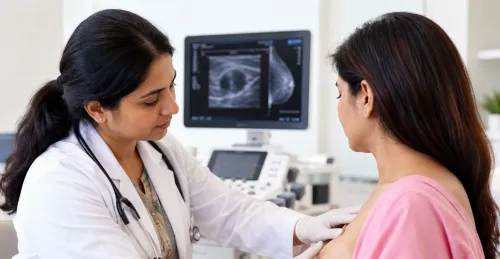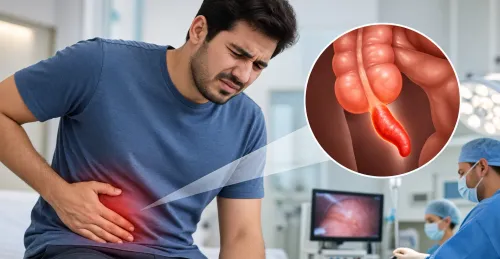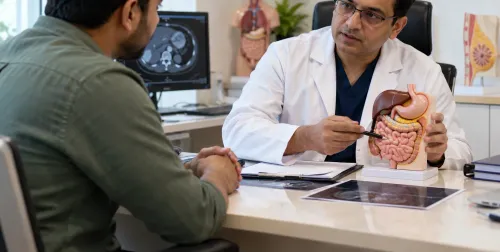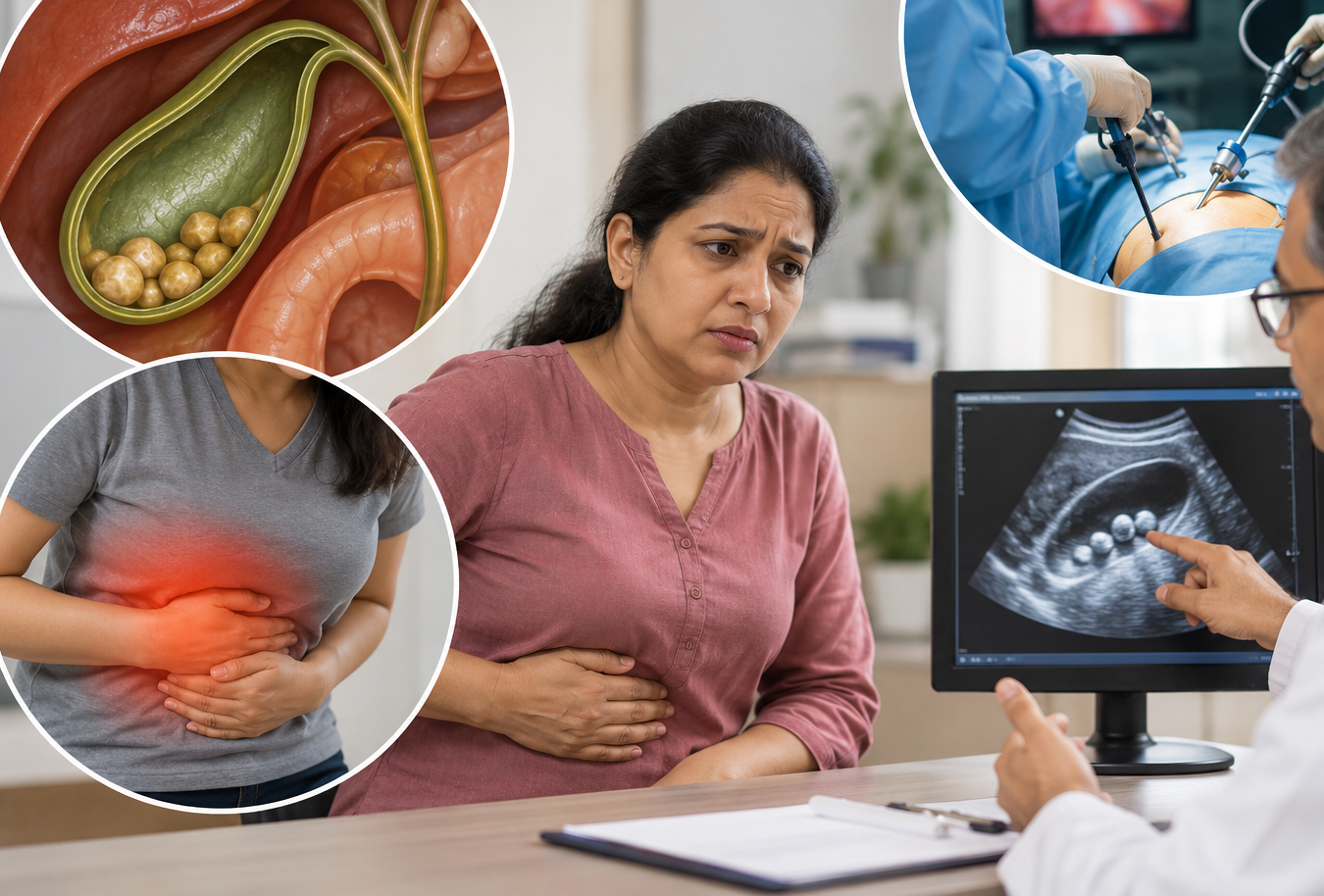
A gall bladder stone may be discovered unexpectedly during an ultrasound, while another patient may undergo imaging after repeated episodes of upper abdominal pain.
These two situations are not necessarily managed in exactly the same way.
Gallstones form inside the gallbladder and may remain asymptomatic in some people. Problems arise when stones contribute to biliary pain, inflammation or blockage within the biliary system.
Patients in Pimpri Chinchwad should understand the symptoms that make surgical assessment particularly relevant.
Recognising Typical Gallstone Symptoms
Gallstone-related pain often occurs in the upper abdomen, commonly toward the right side or central upper abdomen.
The discomfort may become intense and can sometimes be felt toward the back or right shoulder area. Nausea and vomiting may accompany an episode.
However, indigestion, gas and bloating are nonspecific symptoms and can have many causes. Finding gallstones on a scan does not automatically prove that every digestive symptom is caused by them.
Clinical correlation matters.
When Symptoms Become More Concerning
A patient with known gallstones should seek timely medical assessment for severe or persistent abdominal pain, particularly when it occurs with fever, repeated vomiting or jaundice.
These features can be associated with complications requiring more urgent evaluation.
Severe abdominal symptoms should not be managed solely through online advice or repeated pain medication without understanding the cause.
How Gallstones Are Evaluated
Ultrasound is commonly used to identify gallstones and assess the gallbladder.
The surgeon will also consider the symptom pattern, examination findings and relevant blood tests. Additional imaging may be required in selected situations.
Treatment decisions are based on the complete clinical picture rather than simply the number or size of stones reported on an ultrasound.
Understanding Laparoscopic Gallbladder Surgery
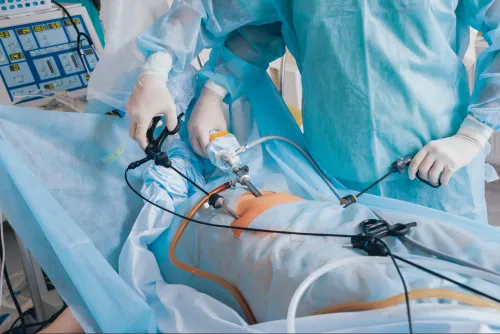
When gallbladder removal is advised, laparoscopic cholecystectomy is commonly used in appropriate patients.
During the operation, the gallbladder containing the stones is removed rather than simply removing individual stones and leaving the gallbladder behind.
Patients should ask about anaesthesia, expected hospital stay, postoperative diet, wound care and the likely timeline for returning to routine activities.
Those travelling from Wakad, Hinjewadi or Pimple Nilakh may also want to plan transport and home assistance for the early recovery period.
A consultation with Dr. Bharat Oza can help determine whether symptoms and investigation findings support surgical treatment.
Incidental Gallstones Need Individual Assessment
One of the most useful distinctions is between symptomatic and incidentally discovered stones.
A stone seen on ultrasound does not by itself explain every abdominal complaint. Likewise, recurrent characteristic symptoms should not be ignored merely because they settle between episodes.
The appropriate next step depends on the symptoms, examination, imaging and individual health factors.
Frequently Asked Questions
Does every gall bladder stone require surgery
Not necessarily. Management depends on symptoms, complications and individual clinical factors.
Can gallstones cause jaundice
A stone affecting the bile duct can be associated with jaundice and requires medical assessment.
Are gallstones removed individually during standard gallbladder surgery
In laparoscopic cholecystectomy, the gallbladder containing the stones is generally removed.
When should abdominal pain receive urgent attention
Severe persistent pain, fever, jaundice, repeated vomiting or significant deterioration warrants prompt medical evaluation.
Keywords