Bright-red blood, anal pain and a lump can come from piles, but the pattern, severity and accompanying symptoms determine how quickly you need care. By the end, you will be able to separate symptoms suitable for brief self-care observation from signs requiring urgent assessment, a scheduled specialist visit or broader bowel investigation.
Key takeaways
- First-ever or unexplained rectal bleeding needs clinical assessment.
- Heavy bleeding, dizziness, black stool or severe pain needs prompt medical care.
- Track blood colour, amount, timing, bowel movements and accompanying symptoms.
- Diagnosis determines whether treatment involves self-care, medicines, procedures or surgery.
Which bleeding patterns need prompt medical assessment?
Judge rectal bleeding by its colour, amount, location and accompanying symptoms: painless bright-red blood on toilet paper or coating stool is often seen with internal haemorrhoids, but first-ever or unexplained bleeding still needs clinical assessment.
| Pattern | What it suggests | What to do |
|---|---|---|
| Bright-red blood on paper or stool surface | Often internal haemorrhoids; fissures can also bleed | Arrange assessment if new, unexplained or recurrent |
| Blood mixed through stool | Bleeding higher in the bowel, including polyps or inflammation | Book prompt medical review |
| Maroon stool or black tarry stool | More substantial intestinal or upper-gastrointestinal bleeding | Seek urgent assessment |
| Clots, heavy bleeding or repeated episodes | More than minor spotting | Use urgent or emergency care |
Seek emergency care for heavy bleeding, clots with weakness, fainting, dizziness, rapid heartbeat or signs of shock. Ongoing blood loss can cause iron-deficiency anaemia; fatigue, paleness, breathlessness or reduced exercise tolerance increase the urgency.
Do not automatically label rectal bleeding as piles. Anal fissures, fistula or abscess, infection, inflammatory bowel disease, diverticular bleeding, polyps and colorectal cancer can look similar. Aspirin, clopidogrel and warfarin can worsen bleeding. Blood mixed through stool, altered bowel habits, abdominal pain, weight loss or persistent bleeding requires medical investigation rather than repeated self-treatment.
What do pain and swelling suggest about the cause?
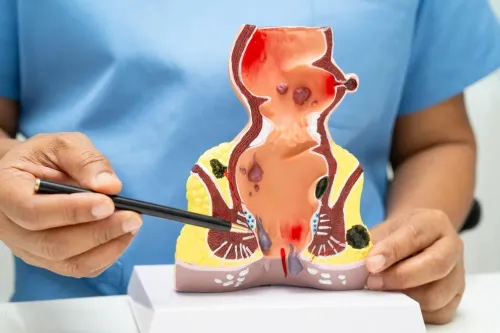
Internal haemorrhoids commonly cause painless bright-red bleeding or tissue that prolapses during a bowel movement. Severe or persistent pain is less typical, so do not assume every painful anal lump is piles.
| Pattern | What it suggests | What to do |
|---|---|---|
| Painless bleeding or tissue that comes out during stool | Internal haemorrhoid | Arrange assessment if bleeding is new, recurrent or unexplained |
| Sudden, very tender lump at the anal opening, sometimes bluish | Thrombosed external haemorrhoid | Seek early clinical review; selected severely painful cases may benefit from treatment within about 72 hours |
| Sharp or tearing pain during or after stool | Anal fissure | Book an examination, especially if pain persists or bleeding recurs |
| Constant throbbing pain with fever, pus, increasing redness or spreading swelling | Anal abscess symptoms | Seek urgent assessment; an abscess generally needs drainage, not creams alone |
| A prolapsed haemorrhoid that cannot be pushed back, becomes increasingly painful or appears trapped | Incarcerated or strangulated prolapse | Obtain prompt medical care |
A thrombosed external haemorrhoid differs from a routine internal haemorrhoid because a clot produces sudden pressure and tenderness. The 72-hour window guides discussion, not self-treatment; a clinician must decide whether treatment is suitable.
Seek urgent care for rapidly worsening pain, fever, pus, spreading redness, inability to pass stool or urine, or a suddenly painful swelling. These signs can indicate infection, obstruction or tissue damage rather than uncomplicated piles.
When is short self-care observation reasonable, and when should you book?
For mild, familiar symptoms without red flags, try piles self-care for a short period: increase dietary fibre, drink adequate fluids, avoid straining and prolonged toilet sitting, and treat constipation. This is observation, not a diagnosis; improvement does not prove that piles caused the symptoms.
Book a piles specialist if you have:
- First-ever bleeding or recurrent bleeding
- Persistent haemorrhoid symptoms after a short period of self-care
- Repeated prolapse, or tissue that does not return inside
- Symptoms that interfere with sitting, walking, sleep or bowel movements
New bleeding with a change in bowel habit and weight loss needs assessment for a colorectal cause, not repeated piles treatment. Arrange evaluation promptly if bleeding occurs with abdominal pain, unexplained weight loss, iron-deficiency anaemia or a family history of colorectal cancer. These features can require investigation beyond the anal canal.
Do not wait for a routine appointment after severe bleeding or the urgent warning signs described above. Rapidly worsening pain, fever, pus, spreading redness, inability to pass stool or urine, or a suddenly painful swelling needs urgent care. Go urgently as well for dizziness, fainting, rapid heartbeat, marked weakness or any sign of shock.
What should you record, and what happens at the specialist visit?
Record the pattern before a piles specialist consultation. This helps separate a local anal problem from bleeding that needs bowel investigation.
1. Note when symptoms began, how often they occur, and whether blood is bright red, maroon or black. Record whether it appears on toilet paper, coats the stool, drips into the pan or is mixed through the stool.
2. Describe pain timing: during a bowel movement, afterwards, constantly or only when sitting. Record any swelling, sudden lump, bluish colour, prolapse, and whether tissue returns inside.
3. Note constipation, diarrhoea, straining, prolonged toilet sitting, fever, pus, abdominal pain, unexplained weight loss, tiredness or breathlessness.
4. Write down any family history of colorectal cancer, your pregnancy status, and every medicine, including aspirin, clopidogrel and warfarin.
The clinician starts with a private history and inspection of the anal area. They may then perform a digital rectal examination to assess the anal canal and rectum.
Anoscopy is a short examination using a small instrument to view the anal canal. It can identify internal haemorrhoids and nearby anal-canal causes that inspection alone cannot show.
A colonoscopy for rectal bleeding, or another bowel investigation, may be recommended for concerning bleeding, anaemia, changed bowel habits, family history, screening needs, or findings beyond a local examination’s reach. The visit establishes the next step; it does not guarantee a diagnosis or treatment before examination.
How does the diagnosis affect treatment choices?
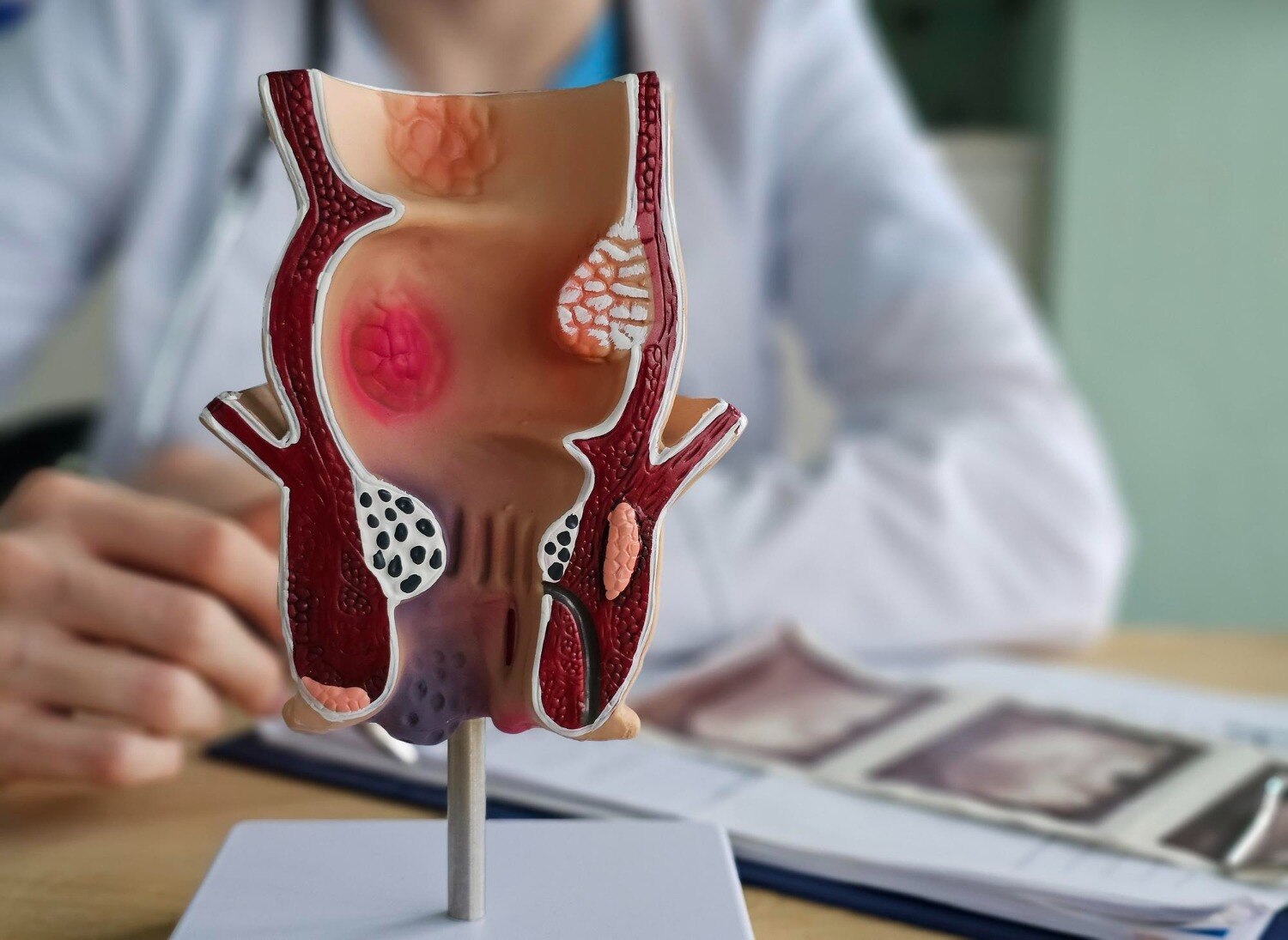
A specialist examination links the procedure to the actual cause, rather than to bleeding, pain or swelling alone. It distinguishes haemorrhoids from a fissure, abscess or another condition that needs a different response.
| Finding | Usual treatment direction | Why the choice differs |
|---|---|---|
| Uncomplicated internal haemorrhoids | Bowel-habit measures or rubber-band ligation | An office treatment may control suitable symptomatic internal disease without surgery. |
| Large external components, combined internal and external disease, or advanced prolapse | Discussion of excisional haemorrhoidectomy | Removing substantial or prolapsing tissue may address the problem more effectively. |
| Thrombosed external haemorrhoid | Individualised treatment for thrombosed haemorrhoid | A severely painful lump assessed early, commonly within about 72 hours, may benefit from excision. |
| Fissure | Fissure-specific medical or procedural care | Pain during or after bowel movements does not follow the haemorrhoid pathway. |
| Abscess | Prompt examination and drainage | Creams alone cannot drain an abscess; delaying treatment allows infection to spread. |
Laser treatment for piles is not automatically the best option because it is marketed as less invasive. Suitability depends on haemorrhoid type, grade, symptom pattern, timing and examination findings; choosing laser without that assessment can leave the underlying problem untreated.
In Pune, a consultation with Dr Bharat Oza - Laparoscopic Surgeon can help examine the bleeding, pain or swelling and match treatment to its cause, instead of selecting a procedure from the symptom alone.
Related service
Piles Specialist Doctor in Wakad, PCMC At Saksham Hospital, we are dedicated to providing advanced, compassionate, and confidential care for patients suffering from piles (hemorrhoids),... View service → |
Frequently asked questions
Which rectal bleeding patterns need prompt medical assessment?
Seek assessment for first-ever or unexplained bleeding, heavy bleeding, recurrent bleeding, dark or black stool, or bleeding with dizziness, weakness, fever or severe pain. Bright-red blood on toilet paper or coating stool can occur with internal haemorrhoids, but colour alone does not confirm the cause.
What can pain and swelling suggest?
Painful swelling can result from an external haemorrhoid, a thrombosed haemorrhoid or another anal condition. Severe or worsening pain, fever, pus, spreading redness or difficulty passing stool needs prompt examination rather than prolonged self-care.
When is short self-care observation reasonable?
Brief observation can be reasonable for mild, familiar symptoms that are improving, with no heavy bleeding, fever, severe pain or concerning bowel changes. Book a specialist appointment when symptoms persist, recur, worsen or remain unexplained.
What should you record before a specialist visit?
Record the blood colour and amount, whether it is on paper or mixed with stool, when it occurs, bowel frequency, stool hardness, straining, pain, swelling, itching, fever, weight loss and medicines. The specialist may inspect the area, perform a digital rectal examination and recommend further tests when needed.
How does diagnosis affect treatment choices?
Treatment depends on whether the cause is haemorrhoids, an anal fissure, infection, thrombosis or another bowel condition. Options can range from fibre, fluids and medicines to office procedures or surgery, based on the findings and symptom severity.