Discovering a breast lump can immediately create concern, but a lump does not automatically mean cancer. Breast lumps can develop for several reasons, including cysts, fibroadenomas, infections, hormonal changes, and malignant conditions.
For patients in Thergaon, Maharashtra, the sensible approach is neither panic nor prolonged observation without assessment. The goal is to identify what the lump represents.
Start With the Characteristics of the Lump
Doctors usually consider several features during evaluation:
- When the lump was first noticed
- Whether its size has changed
- Whether it is painful
- Whether it changes with the menstrual cycle
- Whether there is nipple discharge
- Whether the nipple or skin has changed
- Whether similar lumps occurred previously
- Personal and family medical history
Age is also relevant because the causes and investigation pathways can differ across age groups.
What Does the Examination Look For
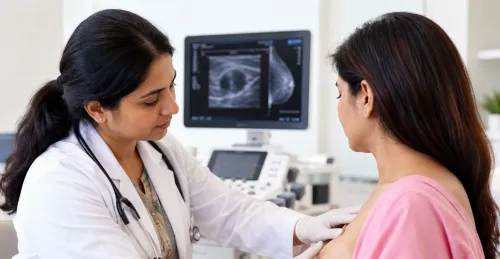
A clinical breast examination assesses the lump's location, approximate size, mobility, consistency, and relationship with surrounding tissues.
The doctor may also examine the skin, nipple, opposite breast, and lymph node areas.
These findings provide useful information, but examination alone may not establish exactly what the lump is.
Imaging Helps Characterize the Lump
Ultrasound is commonly used in breast lump assessment, particularly in younger patients. Mammography may be appropriate depending on age, symptoms, and clinical findings.
Sometimes both investigations are useful.
If imaging identifies an area requiring further evaluation, tissue sampling may be recommended. Fine needle aspiration or core needle biopsy can provide additional information, depending on the type of lesion.
Which Changes Need Particular Attention
A new lump should be assessed, especially when it persists. Additional changes that should not be ignored include:
- Skin dimpling
- Nipple retraction
- Bloody nipple discharge
- Persistent localized breast changes
- An enlarging lump
- Changes in breast shape
- Swelling in the armpit
- Redness accompanied by fever or significant pain
These findings still do not provide a diagnosis by themselves. They simply strengthen the reason for proper evaluation.
When Is Surgery Considered
Not every benign lump needs removal. Some can be monitored based on examination, imaging, and pathology findings.
Surgery may be considered when a lump is symptomatic, increasing in size, clinically concerning, or requires removal for definitive management. The exact decision depends on the diagnosis.
Dr. Bharat Oza evaluates surgical conditions including breast lumps, with further management guided by clinical assessment and appropriate investigations.
One common mistake is repeatedly checking a lump at home while postponing evaluation because it is painless. Pain is not a reliable way to determine whether a breast lump is significant.
Another mistake is assuming every lump needs immediate removal. Proper assessment comes first.
A structured evaluation helps answer the questions patients actually need answered: what the lump is likely to be, whether additional testing is necessary, whether observation is reasonable, and whether surgical treatment should be considered.
Keywords