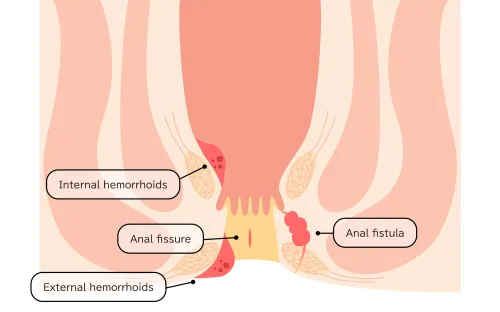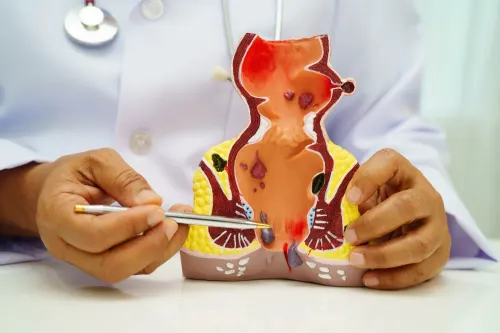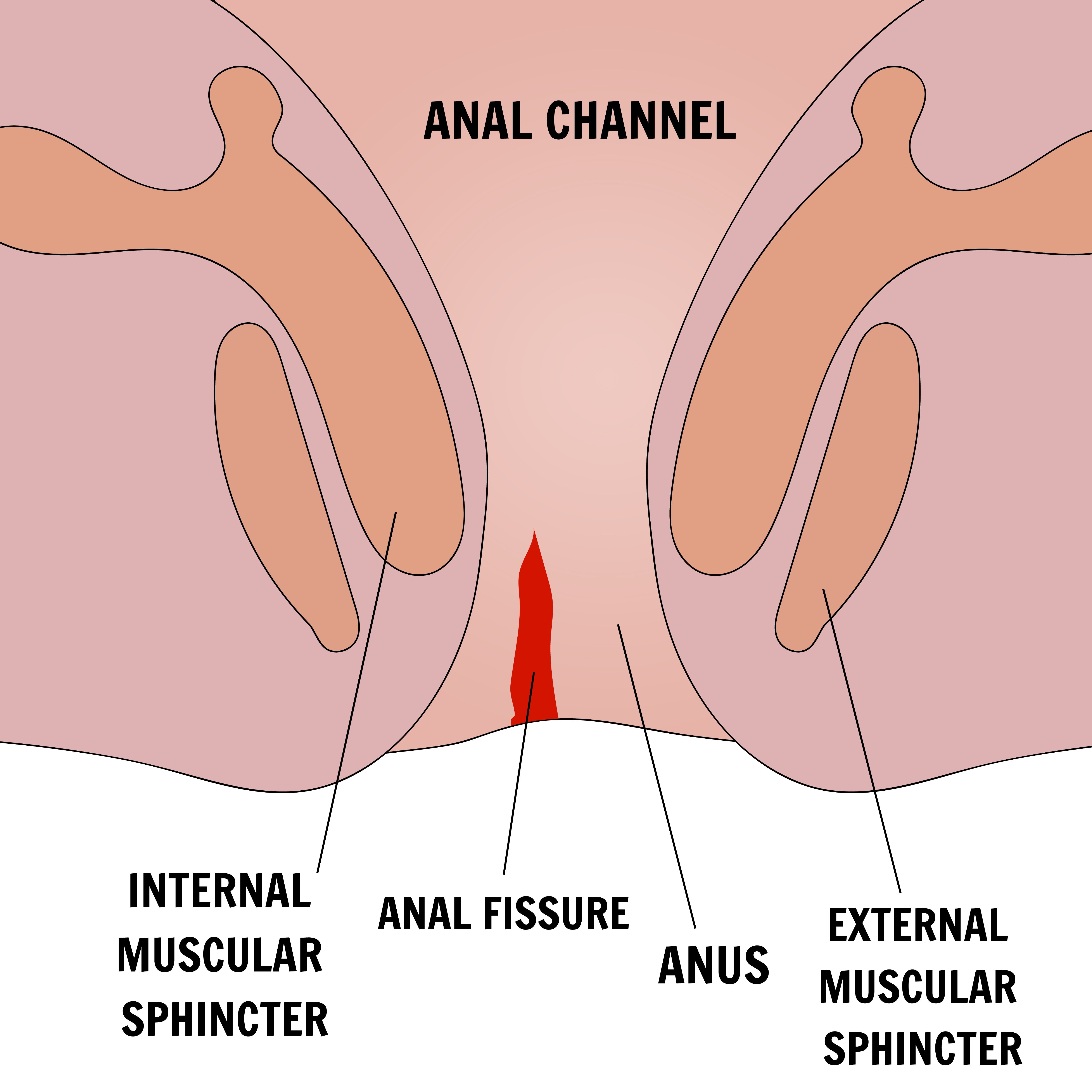
A sharp cut-like pain during stool passage, followed by burning and a small streak of bright-red blood, often points to an anal fissure—but piles, infection, an abscess, eczema, and bowel disease can look similar. You will learn which symptom patterns are suitable for short-term self-care, which need an examination, and how treatment choices change when a fissure lasts beyond six weeks or keeps returning.
Key takeaways
- Sharp pain followed by burning strongly suggests an anal fissure.
- Arrange an examination if pain persists, bleeding continues, or symptoms recur.
- Keep stools soft with fluids, fibre, and prescribed stool-softening treatment.
- Persistent fissures may need prescription medicine or a procedure to relax the anal muscle.
Does the symptom pattern sound like an anal fissure?
Typical anal fissure symptoms follow a clear sequence: sharp pain during bowel movement, followed by burning after bowel movement that can last minutes or hours. A small streak of bright-red blood on toilet paper or the stool surface, and a tight or spasming anal muscle, support the diagnosis.
Clues pointing to another cause include:
- Piles (haemorrhoids): internal piles often cause painless bright-red bleeding; an external thrombosed pile causes a sudden, tender lump at the anal edge.
- Fistula: a persistent opening, pus or foul-smelling drainage near the anus, often after a previous abscess, is more typical than a simple tear.
- Perianal abscess: constant throbbing pain, swelling, redness, warmth or fever needs urgent assessment. An abscess usually requires drainage, not fissure cream.
- Eczema or dermatitis: itching, a raw rash, weeping skin or irritation extending around the anus points toward a skin condition.
- Sexually transmitted infection: blisters, ulcers, warts, discharge, pain during sex or a recent sexual exposure require testing; herpes can cause severe burning.
- Other bowel disease: persistent bleeding, dark or mixed-in stool, diarrhoea, weight loss or a change in bowel habit needs investigation rather than prolonged self-treatment.
A clinician can usually identify a typical fissure through your history and gentle inspection. Severe constant pain, fever, pus, heavy bleeding, black stool, dizziness, or inability to pass stool or urine needs prompt medical care.
When should you stop observing symptoms and arrange an examination?
If symptoms are mild and fit a typical fissure, monitor for several days while keeping stools soft and avoiding straining. Arrange an examination if pain or bleeding is not clearly improving within one to two weeks, returns repeatedly, or continues despite several weeks of stool-softening measures.
Lidocaine may numb pain temporarily, but it does not correct constipation, anal muscle spasm, or impaired healing.
| Type | Time course | What separates it |
|---|---|---|
| Acute anal fissure | Less than six weeks | A recent tear that is starting to improve with softer stools and reduced straining |
| Chronic anal fissure | Six weeks or longer, or repeated episodes | Persistent pain or bleeding, often with a sentinel skin tag, hypertrophied anal papilla, or visible internal sphincter fibres |
Do not keep self-treating without an examination when the diagnosis is uncertain. Seek prompt medical care for:
- Fever, increasing swelling, pus, or severe constant pain, which can indicate an abscess or another infection
- Inability to pass stool or urine
- A weakened immune system with new or worsening anal symptoms
- Recurrent bleeding, bleeding that is more than a small bright-red streak, black stool, dizziness, or faintness
Go to emergency care for heavy bleeding, fainting, severe weakness, or rapidly worsening pain with fever or swelling. A fissure in a lateral position, multiple fissures, or a non-healing wound also needs assessment for Crohn disease, infection, inflammatory bowel disease, or, less commonly, malignancy.
What can you do now to make bowel movements less painful?
Keep each stool soft and easy to pass: that is the core of anal fissure home treatment. Increase fibre gradually to 25 to 35 grams daily from vegetables, fruit, pulses, oats, or whole grains; increasing too quickly can cause bloating.
Drink fluids regularly, unless a clinician has restricted them, and use pale-yellow urine as a practical hydration guide.
- Use a small footstool so your knees sit higher than your hips, lean forward, and relax your abdomen. Do not hold your breath or strain, and leave the toilet after five to 10 minutes.
- Take a warm sitz bath for 10 to 20 minutes after a bowel movement and whenever spasm causes pain. Use comfortably warm, not scalding, water.
- If fibre and fluids do not produce soft stools, ask a pharmacist or clinician about a stool softener or an osmotic laxative such as polyethylene glycol. Follow the product dose; do not keep escalating it for persistent pain or bleeding.
| Measure | How to use it | What it prevents |
|---|---|---|
| Fibre | Build to 25 to 35 grams daily | Hard, bulky stools |
| Fluids | Drink regularly through the day | Dry stool |
| Toilet posture | Feet raised, lean forward, no straining | Excess anal pressure |
| Warm sitz bath | 10 to 20 minutes after defecation | Muscle spasm and pain |
| Stool softener | Use when diet and fluids are insufficient | Re-tearing during passage |
What treatment is used when a fissure does not heal?
If a fissure remains painful after stool-softening measures, prescription treatment usually comes before surgery. Ointments relax the internal anal sphincter; topical nitroglycerin can cause dose-limiting headaches, while diltiazem or nifedipine usually causes fewer reported side effects. Apply only the prescribed amount.
| Option | Main benefit | Main limitation or risk |
|---|---|---|
| Topical nitroglycerin, diltiazem, or nifedipine | Non-invasive; suitable before an operation | Healing takes time; nitroglycerin commonly causes headaches, and fissures can recur |
| Botulinum toxin | Temporarily relaxes the sphincter; useful when ointments fail or are unsuitable | Healing varies by dose and injection site; recurrence is more common than after surgery, and temporary leakage can occur |
| Lateral internal sphincterotomy | Usually the fastest and most reliable healing, with published healing rates around 88–100% | Divides part of the internal sphincter, creating a risk of difficulty controlling gas or stool |
Lateral internal sphincterotomy is not automatically the best choice. Discuss baseline leakage, previous childbirth-related tearing or assisted delivery, prior anal surgery, inflammatory bowel disease, and any known sphincter injury before choosing it. A tailored, shorter incision may reduce continence risk; botulinum toxin or an advancement flap may suit higher-risk patients.
A consultation with Dr Bharat Oza - Laparoscopic Surgeon should address your continence history, not just how long the fissure has lasted. Ask what happens if medical treatment fails, how recurrence will be handled, and whether pregnancy or recent childbirth changes the safest option.
Why do recurrent or unusual fissures need a closer look?
A recurrent anal fissure needs examination when it returns after healing, fails to improve after several weeks of soft stools, or appears in an unusual pattern. A typical fissure lies toward the front or back midline; a lateral fissure or multiple fissures raise concern for Crohn disease, inflammatory bowel disease, infection, or, less commonly, malignancy.
Look for these reasons to arrange further assessment:
- Loose stools, abdominal pain, weight loss, mouth ulcers, joint symptoms, or perianal drainage can point to Crohn disease or another form of inflammatory bowel disease.
- A lateral fissure, several fissures, an irregular ulcer, a firm edge, or a persistent lump needs examination to exclude infection and anal cancer. A clinician may need swabs, blood tests, imaging, or biopsy.
- New ulcers, discharge, blisters, or a relevant sexual exposure can indicate a sexually transmitted infection rather than a simple tear.
- After childbirth, an anterior fissure, worsening leakage of stool or gas, reduced control, or a history of severe tearing or assisted delivery can indicate pelvic-floor or anal-sphincter injury. Tell the clinician before considering sphincter-dividing surgery.
- Constant throbbing pain with redness, swelling, fever, or pus suggests a perianal abscess. It requires urgent assessment because drainage, not fissure cream, treats the problem.
Do not keep applying numbing cream while recurrent bleeding or uncertain symptoms continue. Pain relief does not identify the cause or repair impaired healing.
Frequently asked questions
Does pain during and after a bowel movement suggest an anal fissure?
Sharp pain during a bowel movement followed by burning that lasts minutes or hours, with bright-red blood on the paper or stool surface, fits a typical anal fissure pattern.
When should you arrange an examination for possible anal fissure?
Arrange an examination when pain or bleeding persists, symptoms keep returning, pain becomes severe, or the pattern is unusual. Seek prompt care for heavy bleeding, black stools, fever, or increasing swelling.
What can make bowel movements less painful during fissure healing?
Keep stools soft by drinking fluids, eating fibre, avoiding straining, and using a stool softener or other treatment recommended by a clinician. Warm-water baths can also reduce discomfort.
What treatment is used when an anal fissure does not heal?
A clinician may prescribe ointment that relaxes the anal muscle and supports healing. Persistent fissures can require botulinum toxin injection or a surgical procedure to reduce muscle spasm.
Why do recurrent or unusual anal fissures need closer assessment?
Repeated fissures or fissures in an unusual position can point to conditions other than routine constipation-related injury. A clinician may need to examine the area and investigate the underlying cause.