Painful swelling near the anus that settles after releasing pus, then returns in the same place, follows a pattern that deserves attention. By the end, you will know which symptoms point toward a fistula, when infection needs urgent care, how clinicians confirm the diagnosis, and why treatment depends on the tract’s path through the sphincter muscles.
Key takeaways
- Recurring drainage from the same opening after an abscess suggests an anal fistula.
- Seek urgent care for fever, spreading redness, severe pain, or difficulty passing urine.
- MRI or examination under anaesthesia can map a fistula’s route before surgery.
- A recurrent fistula needs reassessment because the remaining tract may branch or involve the sphincter.
Does the pattern of pain and drainage fit a fistula?
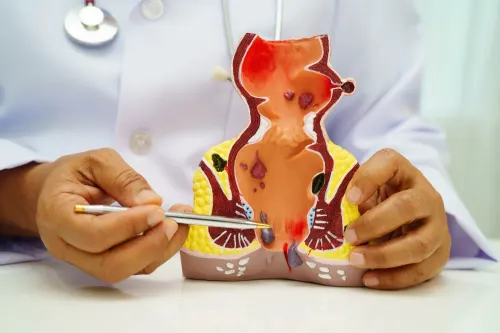
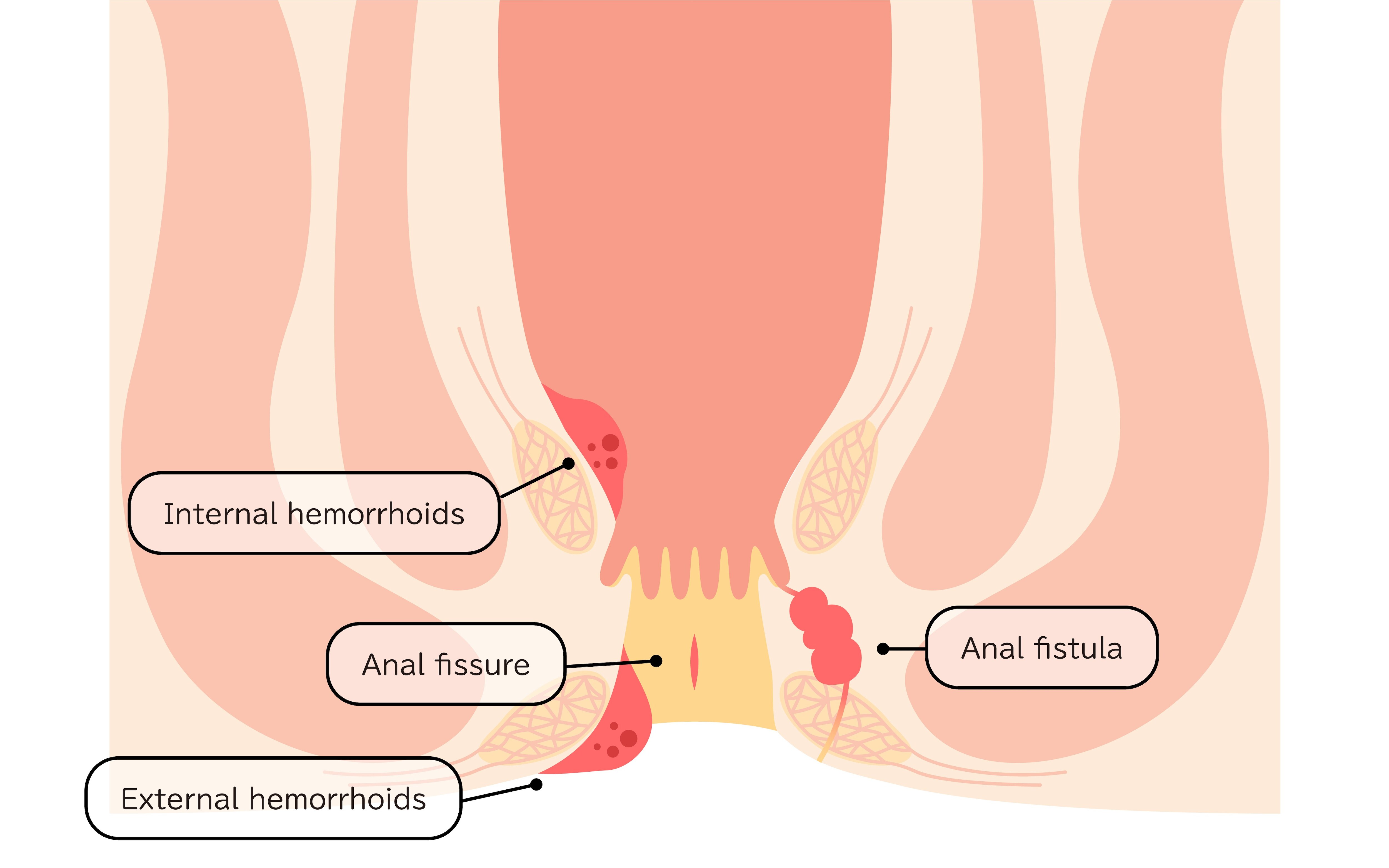
A fistula fits a repeating cycle: an earlier painful lump or abscess drains, pressure eases, then recurring anal pain, swelling near anus, and intermittent pus or blood discharge return from the same small opening. These anal fistula symptoms occur because a tunnel remains between the anal canal and skin; symptoms alone cannot confirm it.
| Condition | Pattern that points away from a fistula |
|---|---|
| Abscess | Severe, constant throbbing pain and a tender, hot swelling develop quickly. Drainage may relieve pressure, but a new lump needs examination. |
| Fissure | Sharp or burning pain during and after bowel movements, with a small streak of bright-red blood. There is no draining skin opening. |
| Haemorrhoids | Itching, bleeding, a soft lump, or tissue that prolapses; pus and repeated swelling at one spot are not typical. |
| Hidradenitis suppurativa | Repeated boils, scars, or draining openings affect the anal area and often the groin, armpits, or under the breasts. |
| Crohn’s disease | Multiple or unusually placed fistulas, poor healing, diarrhoea, weight loss, abdominal pain, or mouth ulcers raise concern. |
| Sexually transmitted infection | Ulcers, blisters, warts, rectal discharge, bleeding, or pain after sexual exposure suggest infection and require testing. |
A persistent wound, atypical lump, or fistula without a preceding abscess deserves reassessment rather than repeated antibiotics. A clinician needs to inspect the skin and perform a digital rectal examination when appropriate; Crohn’s disease, hidradenitis, tuberculosis, foreign-body disease, and malignancy can mimic recurrence.
When does recurring swelling need urgent medical care?
Recurring swelling needs a prompt clinical appointment, especially when it returns at the same spot, drains pus or blood, or leaves a small opening that never closes. Repeated cycles of swelling and temporary relief after drainage suggest a blocked tract or anal abscess that needs examination rather than repeated self-treatment.
| Situation | Warning signs | What to do |
|---|---|---|
| Prompt appointment | Recurrent lump, intermittent discharge, persistent irritation, or pain that settles and returns | Arrange a clinical examination soon, even if you feel well between episodes |
| Same-day assessment | Fever, rapidly worsening pain, increasing swelling, spreading redness, difficulty urinating, or feeling systemically unwell | Contact an urgent-care service or emergency department today; these signs can indicate an abscess or spreading infection |
| Emergency assessment | Feeling faint or confused, severe weakness, uncontrolled pain, inability to pass urine, or rapidly worsening illness | Seek emergency care immediately |
Do not wait for the swelling to burst if pain is escalating or redness is extending across the surrounding skin. A fluctuant anal abscess often requires drainage; antibiotics alone do not usually remove the infected cavity. Do not squeeze it, insert anything into the opening, or rely on repeated antibiotic courses without a diagnosis.
Immune suppression, diabetes, Crohn’s disease, or previous anorectal surgery lowers the threshold for same-day assessment.
How is an anal fistula confirmed and mapped?
A visible skin opening is not enough to confirm an anal fistula. Inspection looks for an opening, pus or blood, scarring and surrounding inflammation. A digital rectal examination checks for tenderness, a firm cord, an internal opening or an associated abscess, although a normal-feeling examination does not exclude a deeper tract.
Pelvic MRI is most useful when the fistula is recurrent, branching, unusually positioned or linked to Crohn’s disease. It can show the main tunnel, secondary branches, the internal opening, collections of pus and an abscess hidden within the anal sphincter or pelvic tissues. A straightforward, clearly visible fistula does not always need imaging.
Endoanal ultrasound can show the tract and its relationship to the sphincter muscles, and it provides another option when MRI is unsuitable or unavailable. Its accuracy depends on the operator and the tract’s location.
Examination under anaesthesia is used when pain prevents a reliable examination or the anatomy remains uncertain. The surgeon can inspect and gently trace the tract, identify the internal opening and drain an abscess during the same procedure.
Forceful probing while you are awake can create a false passage, so the external opening should never be treated as a complete map. The final plan combines examination findings with imaging and the suspected amount of sphincter involvement.
Why does the fistula’s route determine the operation?
The tract’s relationship to the anal sphincter matters more than the procedure’s name. A simple low fistula may be safely opened, while a complex high fistula needs a sphincter-sparing plan to protect continence.
| Option | What it means | When it applies |
|---|---|---|
| Drainage | Opens an abscess and releases pus; it does not usually eliminate the fistula tract | Urgent treatment for an abscess or active infection |
| Fistulotomy | Lays the tract open so it heals from the base | Selected low tracts with limited sphincter involvement; dividing too much muscle can cause gas or stool leakage |
| Seton placement | A loose seton keeps a tract draining; a cutting seton gradually divides muscle | A loose seton can control sepsis before LIFT or an advancement flap; a cutting seton is selective because continence can worsen |
| LIFT | Closes the tract in the space between sphincter muscles without intentionally cutting the external sphincter | Suitable anatomy when preserving muscle matters; success falls with horseshoe extensions, Crohn’s disease, obesity or previous surgery |
| Advancement flap | Covers the internal opening with a flap of rectal tissue | High or recurrent fistulas when fistulotomy carries unacceptable muscle injury |
| Laser closure | Ablates and closes the tract through a small access point | A sphincter-sparing option, but evidence is variable and recurrence remains possible |
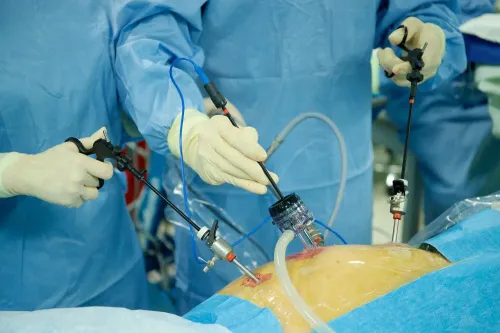
Before recommending fistulotomy, the surgeon considers baseline continence, previous operations, obstetric sphincter injury, inflammatory bowel disease and an anterior tract in a woman. Dr Bharat Oza - Laparoscopic Surgeon can use that assessment to match treatment to anatomy rather than choosing by the label “laser” or “minimally invasive.”
Related service
Fistula Treatment Specialist in Wakad, PCMC What is Anal Fistula? An anal fistula is a tunnel connecting the skin near the anus to the inside of the bowel (usually the rectum). View service → |
What should you do if the fistula returns or never heals?
A new painful lump or renewed discharge after the area seemed healed needs clinical review; do not label it normal postoperative drainage. A recurrent anal fistula can reflect fistula recurrence, an undrained abscess, or a missed side branch, particularly after complex disease.
Persistent drainage despite treatment is not a reason for repeated antibiotic courses; antibiotics do not close an established tract.
Reassessment is especially important when the wound remains open, the fistula appears without a preceding abscess, or the discharge is bloody, foul-smelling, or accompanied by an unusual lump. Ask the clinician to reconsider these causes:
- Missed branches or an abscess, assessed with pelvic MRI, endoanal ultrasound, or examination under anaesthesia when the anatomy is unclear
- Crohn’s disease, particularly with multiple, recurrent, or poorly healing fistulas, diarrhoea, abdominal pain, weight loss, or mild symptoms that seem unrelated
- Hidradenitis, with repeated boil-like lesions in the groin, armpits, buttocks, or perineum
- Tuberculosis, a sexually transmitted infection, foreign-body disease, or malignancy when the wound is atypical or non-healing
After treatment, attend the planned wound review and report increasing pain, swelling, fever, bleeding, or renewed pus promptly. Complex cases need follow-up until drainage stops and the wound closes; Crohn’s disease requires coordinated gastroenterology and surgical care. Do not close an external opening while active rectal or intestinal inflammation remains uncontrolled.
Frequently asked questions
Does recurring pain, swelling and discharge fit an anal fistula?
It can. A typical pattern is a previous painful abscess that drained, followed by recurring pain, swelling, and pus or blood from the same skin opening. Symptoms alone cannot confirm a fistula.
When does recurring swelling need urgent medical care?
Seek urgent medical care for fever, chills, rapidly increasing swelling, spreading redness, severe or constant pain, or difficulty passing urine. These signs can indicate a new or spreading abscess.
How is an anal fistula confirmed and mapped?
A surgeon examines the opening and anal canal, then may use examination under anaesthesia, pelvic MRI, or endoanal ultrasound to identify the internal opening, external opening, branches, and sphincter involvement.
Why does the fistula’s route determine the operation?
The route shows how much anal sphincter muscle the tract crosses. A superficial tract may be opened and allowed to heal, while a deeper or branching tract may need staged treatment or a sphincter-sparing procedure.
What should you do if the fistula returns or never heals?
Arrange a review with a colorectal or experienced general surgeon. Persistent drainage or repeat abscesses require reassessment for a missed internal opening, branching tract, Crohn’s disease, or another cause.