Anal symptoms range from minor irritation to abscess, significant blood loss or disease higher in the bowel, and appearance alone cannot reliably identify the cause. Use the warning signs, bleeding patterns and time thresholds below to decide between emergency care, a prompt appointment and short-term monitoring.
Key takeaways
- Seek emergency care for heavy, continuous bleeding or bleeding with faintness.
- Bright-red blood often differs in significance from black, tarry or mixed stool.
- Arrange examination for persistent pain, swelling, a new lump or recurrent bleeding.
- Bring symptom timing, medicines, bowel changes and previous test results to your visit.
When anal symptoms need emergency care today
Seek emergency assessment today for heavy rectal bleeding, continuous bleeding, or any bleeding with dizziness or fainting, confusion, marked weakness, or shortness of breath. Do not wait for a routine proctologist appointment; call emergency services if you feel faint or cannot travel safely.
| Situation | Why it matters | What to do |
|---|---|---|
| Heavy or continuous bleeding, large clots, or maroon stool | You may be losing a significant amount of blood | Go to an emergency department now |
| Bleeding with dizziness, fainting, confusion, severe weakness, or a racing heartbeat | These symptoms can signal dangerous blood loss | Seek emergency care immediately |
| Black tarry stool, especially with weakness or abdominal pain | This can indicate bleeding higher in the digestive tract | Get urgent assessment today |
| Severe or rapidly worsening anal pain or swelling with fever, pus, or difficulty urinating | A perianal abscess can require prompt drainage, even without a visible lump | Go to emergency care |
| Anal pain or bleeding with severe abdominal pain, or inability to pass stool or gas | The problem may extend beyond a local hemorrhoid or fissure | Seek emergency assessment |
A painful lump without these warning signs still needs prompt evaluation if it enlarges quickly, becomes extremely tender, or discharges pus. Do not repeatedly treat bleeding as piles when it returns, persists, or has no clear cause.
Bright-red blood can come from a fissure or hemorrhoid, but it can also occur with inflammatory bowel disease, polyps, or cancer. When symptoms are severe, do not drive yourself.
What the colour and pattern of bleeding can indicate
Bright-red blood on toilet paper usually comes from the anus or lowest rectum, often with a fissure or hemorrhoid. A small streak after one painful bowel movement is less concerning than bleeding that returns, increases, or occurs without an obvious trigger.
- Blood coating stool: Blood on the outside of formed stool points toward bleeding near the anus or rectum. Arrange an evaluation if it recurs, continues after constipation improves, or appears with altered bowel habits.
- Blood mixed into stool: Blood throughout the stool suggests the source may be farther inside the rectum or colon. Do not repeatedly treat it as piles; book a clinical assessment.
- Blood clots: Clots indicate blood collected before passing and can accompany more substantial bleeding. Seek urgent assessment for repeated clots, a large clot, heavy flow, or bleeding that does not stop.
- Black, tarry stool: This can indicate digested blood from higher in the digestive tract rather than an anal problem. Seek emergency care, especially with weakness, dizziness, fainting, confusion, or abdominal pain.
Any pattern deserves assessment when bleeding is persistent or unexplained. Weight loss, a sustained change in bowel habits, iron-deficiency anaemia, abdominal pain, or a personal or family history of colorectal polyps or cancer strengthens the need for colon evaluation, even when hemorrhoids are present.
When pain, swelling or a lump needs examination
A fissure usually causes sharp or tearing anal fissure pain during and after a bowel movement, with a small streak of bright-red blood. Irritation causes soreness or itching without a deep, steadily worsening pain. Uncomplicated internal hemorrhoids can bleed, itch or prolapse, but severe pain needs examination.
A sudden, tender lump at the anal edge often indicates a thrombosed external hemorrhoid. It can be extremely painful but usually remains localised. Do not assume a painful swelling is a hemorrhoid if it is growing quickly or feels deep.
Arrange prompt assessment if you have:
- Constant deep rectal pain, pain when sitting, or pain that worsens over hours
- Fever, chills, spreading redness, or pus near anus
- Difficulty passing urine, even without a visible lump
- A recurrent opening that leaks pus or fluid, suggesting a fistula
- A fissure that does not heal, keeps returning, is on the side rather than the midline, or occurs with diarrhoea and abdominal pain
These features raise concern for a perianal abscess or another condition requiring treatment; an abscess often needs drainage, and antibiotics alone may not resolve it.
Book an examination for a persistent lump, ulcer, wart-like growth, discharge, narrowing of the anal opening or bleeding that continues after irritation settles. Those findings do not prove cancer, but creams and laser treatment are unsafe substitutes for identifying the cause.
Why recurrent or unexplained bleeding needs broader evaluation
Stop assuming piles are the cause when you have recurrent rectal bleeding, bleeding without a clear trigger, or symptoms that return after treatment. Hemorrhoids can coexist with polyps, inflammatory bowel disease, colorectal cancer, or an anal condition, so repeated self-treatment can delay the right diagnosis.
Ask for medical evaluation if bleeding occurs with:
- Unintentional weight loss, persistent tiredness, or iron-deficiency anemia
- A sustained change in bowel habits, such as new constipation, diarrhoea, narrower stools, or a repeated urge to pass stool
- Abdominal pain, bloating, or cramping
- A personal history of colorectal polyps or cancer, or a close family history of either
- A fissure that does not heal, repeatedly returns, appears away from the midline, or occurs with diarrhoea and abdominal symptoms
- A persistent lump, ulcer, wart-like growth, itching, discharge, narrowing of the anal opening, or bleeding that does not resolve
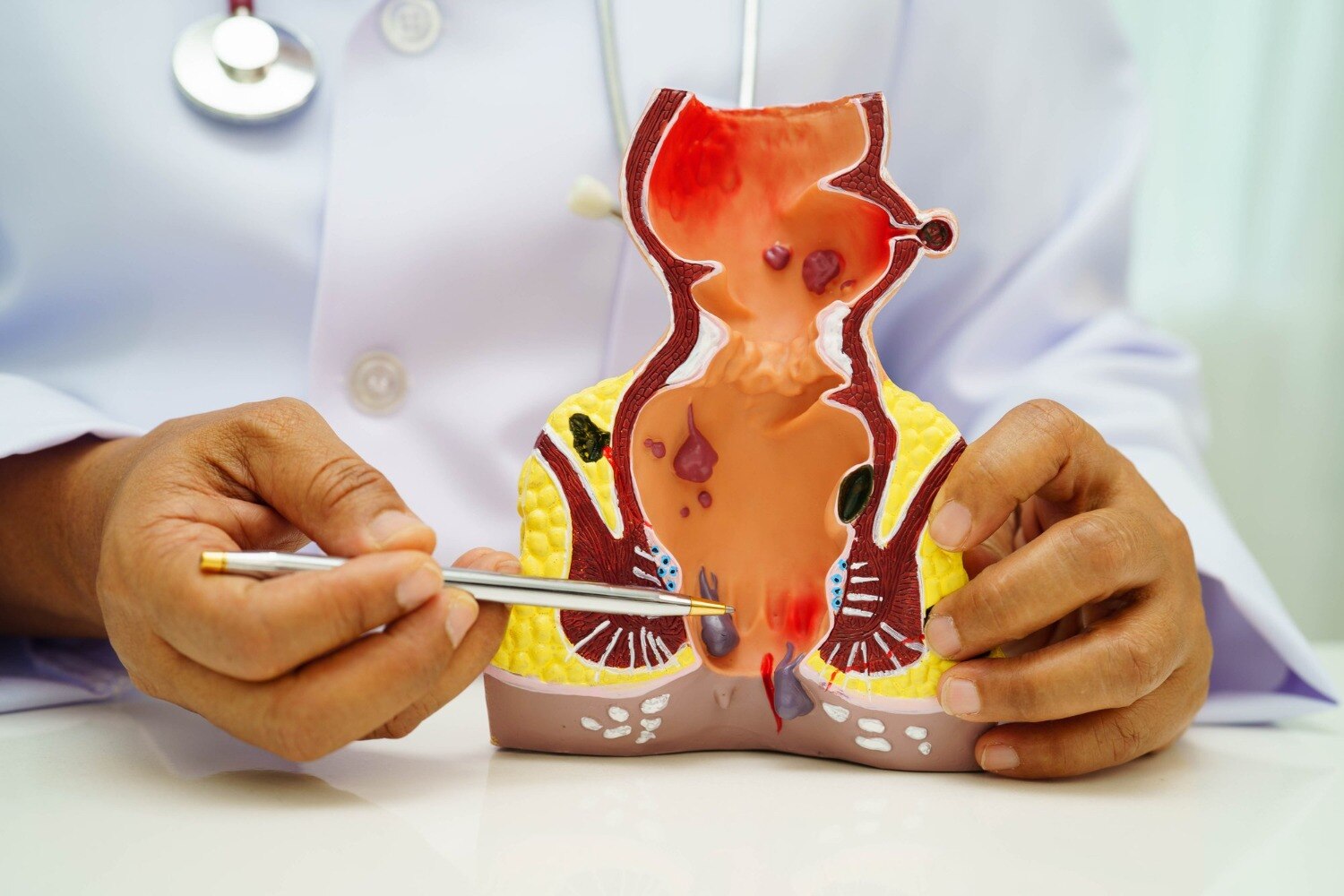
A proctologist may inspect the skin, perform a digital rectal examination, and use an anoscope to examine the anus and lower rectum. Those tests can identify many local causes, but they do not examine the entire colon.
You may need colonoscopy when blood is mixed into stool, bleeding keeps recurring, or your symptoms and risk factors point to a source higher in the colon. Blood tests can check for iron-deficiency anemia and the wider effects of ongoing blood loss.
What happens at the first visit and how to prepare
1. Expect inspection of the skin around the anus for fissures, swelling, clots, discharge or fistula openings. The clinician may perform a digital rectal examination to feel the anal canal and lower rectum, followed by anoscopy or proctoscopy to view the lining and identify hemorrhoids, bleeding points or other lesions.
You can ask for an explanation before each examination.
2. Blood tests are useful when bleeding could have caused anaemia, or when fever and severe pain raise concern about infection.
A colonoscopy is more appropriate when bleeding is recurrent or unexplained, blood is mixed with stool, bowel habits have changed, or you have weight loss, iron-deficiency anaemia, abdominal pain, or a personal or family history of polyps or colorectal cancer.
Colonoscopy preparation includes a prescribed bowel-cleansing solution and restricted food or clear liquids; follow the endoscopy unit’s instructions exactly.
3. Imaging is chosen when the examination cannot show the full problem. Pelvic MRI can map a fistula or deep abscess, while CT may be used for severe abdominal symptoms or suspected infection.
Dr Bharat Oza - Laparoscopic Surgeon can help decide whether symptoms need an office examination, colon evaluation or imaging rather than repeated self-treatment.
Bring a medication list, allergies, previous reports, and this information:
- When symptoms began and whether they recur
- Blood colour, amount and frequency
- Pain, fever, discharge, bowel changes or urinary difficulty
- Previous bowel disease, surgery, colonoscopy and family cancer history
- Any creams, laxatives or pain medicines already tried
Related services
A proctologist is a medical specialist, and they are also known as a colorectal surgeon or colon and rectal surgeon. View service → |
Fistula Treatment Specialist in Wakad, PCMC What is Anal Fistula? An anal fistula is a tunnel connecting the skin near the anus to the inside of the bowel (usually the rectum). View service → |
Frequently asked questions
When does anal bleeding require emergency care?
Seek emergency assessment for heavy or continuous rectal bleeding, or bleeding with dizziness, fainting, confusion, marked weakness or shortness of breath.
What can the colour and pattern of rectal bleeding indicate?
Bright-red blood often points to bleeding near the anus or lower rectum, while black, tarry stool or blood mixed through stool needs prompt medical evaluation. The pattern alone cannot identify the cause.
When should pain, swelling or an anal lump be examined?
Arrange an examination for severe or persistent pain, increasing swelling, a new lump, pus, fever, or symptoms that do not settle with basic care.
Why does recurrent or unexplained rectal bleeding need broader evaluation?
Repeated or unexplained bleeding can have causes beyond haemorrhoids, including fissures, inflammation, polyps or bowel disease, so a clinician may need to examine the anal canal and consider further tests.
What happens at a first proctologist visit?
The clinician reviews your symptoms and medical history, examines the area, and decides whether an anoscopy, proctoscopy, blood test or other investigation is needed. Bring a symptom timeline, medicine list and previous reports.
Related service
Piles Specialist Doctor in Wakad, PCMC At Saksham Hospital, we are dedicated to providing advanced, compassionate, and confidential care for patients suffering from piles (hemorrhoids),... View service → |