Abdominal pain, bloating, nausea, altered bowel habits, and indigestion often have non-surgical explanations, but symptoms that persist, recur, or occur with weight loss and bleeding deserve more than repeated self-treatment. You will learn when to book a general-surgeon assessment, when to go straight to an emergency department, what the first visit involves, and how doctors decide between testing, referral, and surgery.
Key takeaways
- Book an assessment when pain lasts days or repeatedly returns over two to four weeks.
- Seek emergency care for severe pain, repeated vomiting, fainting, or a swollen rigid abdomen.
- Pain location and timing can help distinguish hernia, obstruction, organ disease, and abdominal-wall pain.
- A surgeon may recommend observation, medication, imaging, or surgery after examination and test results.
When Should Ongoing Abdominal Symptoms Be Assessed?
Persistent abdominal pain deserves a general-surgeon appointment when it lasts several days without improvement, returns over two to four weeks, or disrupts eating, sleep, work, or bowel function. Persistent pain alone does not mean you need an operation; assessment can separate organ disease, abdominal-wall pain, hernia, obstruction, and non-surgical causes.
- Recurring pain, bloating, nausea, vomiting, or indigestion
- Altered bowel habits, unexplained weight loss, iron-deficiency anaemia, or rectal bleeding
- A palpable abdominal or groin mass
- Symptoms after previous abdominal surgery, especially cramping, distension, vomiting, or reduced stool and gas passage
| Pattern | Why assessment matters | Appropriate next step |
|---|---|---|
| Symptoms persist or recur | A cause needs examination instead of watchful waiting | General surgeon, gastroenterologist, or primary-care doctor |
| Bleeding, anaemia, unexplained weight loss, or a mass | These require evaluation for gastrointestinal disease | General surgeon or gastroenterologist |
| Pelvic or urinary symptoms | The source may not be surgical | Gynaecologist, urologist, or primary-care doctor |
| Severe pain, rigid or swollen abdomen, repeated vomiting, fainting, blood, high fever, yellow skin or eyes, or no stool or gas | These can signal a dangerous complication | Emergency department, not a scheduled appointment |
Which Abdominal Symptoms Require the Emergency Department?
Go to the emergency department instead of waiting for a scheduled consultation if you have severe or rapidly worsening pain, a rigid, markedly swollen, or very tender abdomen, repeated vomiting, fainting, confusion, or cold, clammy skin. These abdominal emergency warning signs can signal peritonitis, perforation, intestinal obstruction, bowel ischemia, major bleeding, or shock.
| Warning sign | Possible concern | Why urgent |
|---|---|---|
| Severe pain, rigid abdomen, or rapid worsening | Peritonitis, perforation, or ischemia | Infection or loss of blood supply can damage bowel quickly |
| Repeated vomiting or inability to pass stool or gas | Intestinal obstruction | Pressure and dehydration increase while the bowel remains blocked |
| Fainting, confusion, cold clammy skin, or blood in vomit or stool | Bleeding or shock | Circulatory collapse requires immediate treatment |
| High fever or yellow skin or eyes | Acute gallbladder disease or bile-duct obstruction | Delayed treatment can lead to severe infection or perforation |
| Painful abdominal or groin lump that cannot be pushed back | Incarcerated or strangulated hernia | Trapped bowel can lose its blood supply, especially with vomiting, bloating, or no gas |
Previous abdominal surgery plus cramping, distension, vomiting, and no bowel movement or gas needs urgent assessment for adhesive small-bowel obstruction. Do not treat that combination as ordinary constipation. Rapid deterioration, worsening tenderness, or collapse makes immediate emergency transport safer than travelling to a routine appointment.
What Can the Location and Pattern of Pain Reveal?
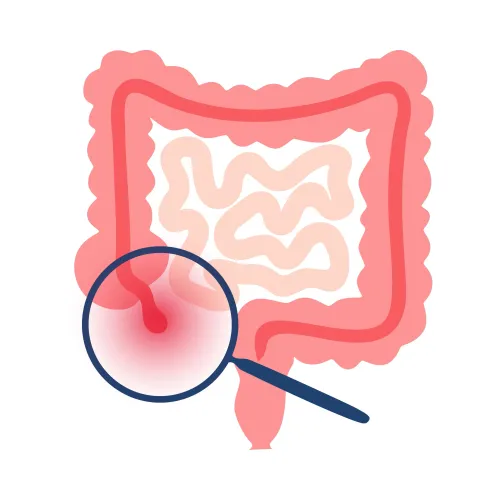
Persistent right-lower-quadrant pain makes a surgeon consider appendicitis, an appendiceal abscess, diverticulitis, bowel disease, urinary causes, or gynaecological causes. It does not automatically mean an operation: an appendiceal abscess or uncomplicated diverticulitis may initially need antibiotics, drainage, fluids, and observation.
Right-upper-quadrant pain after eating points toward gallbladder disease, but reflux, constipation, viral gastroenteritis, medication effects, and functional bowel disorders can also cause upper-abdominal symptoms. Ultrasound may show gallstones; symptom-free stones do not normally require removal. Persistent right-upper-quadrant pain with fever, nausea, or vomiting needs prompt evaluation for acute cholecystitis.
| Pattern or finding | What it may suggest | What evaluation clarifies it |
|---|---|---|
| Groin or umbilical swelling | Hernia, including an occult hernia | Examination while standing, coughing, or straining; ultrasound or CT if unclear |
| Pain near a previous operation scar | Incisional hernia or adhesions after surgery | Examination and selective imaging |
| Localised abdominal wall pain | Muscle strain or abdominal wall pain | Pain that increases when the abdominal muscles tense supports a wall source |
| Cramping, bloating, or vomiting after surgery | Adhesions causing intermittent obstruction | Urgent assessment if stool or gas stops |
Routine imaging often cannot confirm adhesions. Surgery solely to search for them can create new adhesions and injure bowel, so persistent pain alone is not an indication for an operation.
What Happens at a General-Surgeon Appointment?
At a first general-surgeon consultation, the surgeon will ask when symptoms began, how long they last, what triggers them, whether meals or movement change them, and how severe they become. Explain vomiting, stool and gas passage, urinary changes, menstrual timing or pregnancy possibility, fever, weight change, and bleeding.
1. The surgeon reviews medicines, allergies, family history, previous operations, and conditions such as anaemia or diabetes. Bring a pain diary, medication list, scan reports and images, operation records, family history, pregnancy information, and bowel and urinary details.
2. During the abdominal examination, you may be examined lying down, then standing, coughing, or straining. These positions can reveal a hernia that disappears when you lie down. The surgeon also checks tenderness, swelling, scars, guarding, and abdominal-wall pain.
3. Tests depend on the suspected cause. Blood tests can look for infection or anaemia; urine testing can identify urinary causes. An abdominal ultrasound and CT serve different purposes: ultrasound commonly assesses the gallbladder or some hernias, while CT can identify obstruction, diverticulitis, perforation, or a mass.
Radiation and contrast risks form part of that choice. Selected upper-GI or bowel symptoms may lead to an endoscopy referral.
4. Findings may support treatment without surgery or referral to a gastroenterologist, gynaecologist, urologist, emergency physician, or primary-care doctor. A history of cramping, distension, vomiting, and no stool or gas after abdominal surgery requires urgent assessment for adhesive obstruction, not routine constipation care.
How Is the Treatment Decision Made After Evaluation?
Assessment links the diagnosis to the next step: monitoring, nonoperative abdominal treatment, referral, or an operation. The choice depends on the diagnosis, complications, symptom burden, test findings, immune status, operative risk, and effect on quality of life—not a scan finding alone or a fixed number of symptom episodes.
Persistent pain can still have no surgically correctable cause.
1. Monitor when examination and tests show no urgent or treatable surgical problem. Reassessment matters if symptoms change or new warning signs appear.
2. Treat medically when the cause is suitable for medicines, diet changes, bowel regulation, or other nonoperative care. Uncomplicated diverticulitis, for example, does not require colon surgery after a predetermined number of attacks.
3. Refer to a gastroenterologist, gynaecologist, urologist, or primary-care doctor when the findings point outside general surgery.
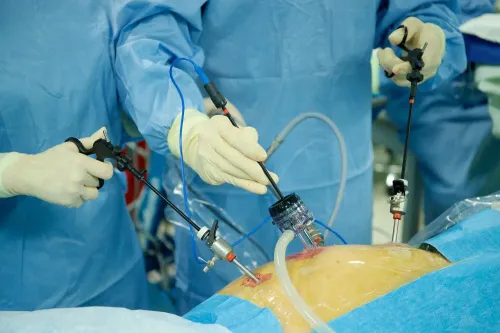
4. Operate when the expected benefit outweighs nonoperative options, such as preventing complications or relieving a clearly identified source of disabling symptoms.
Before elective surgery, ask what improvement is expected, which nonoperative alternatives remain, and what happens if no correctable cause is found. Discuss the risks of abdominal surgery: bleeding, infection, injury to bowel or other organs, blood clots, anaesthesia complications, conversion from laparoscopic to open surgery, and persistent or recurrent pain.
Dr Bharat Oza - Laparoscopic Surgeon can provide a structured surgical consultation Pune patients may use when persistent symptoms raise a possible surgical question; that consultation may end with reassurance, testing, treatment, or referral rather than an operation.
Related service
Best General Laparoscopic Surgeon in Wakad, PCMC Dr Bharat Oza is recognised as one of the leading and best General Laparoscopic Surgeon in PCMC and Pune. View service → |
Frequently asked questions
When should ongoing abdominal symptoms be assessed by a general surgeon?
Arrange an appointment when pain lasts several days without improvement, returns over two to four weeks, or disrupts eating, sleep, work, or bowel function.
Which abdominal symptoms require the emergency department?
Seek emergency care for severe or rapidly worsening pain, repeated vomiting, fainting, a swollen or rigid abdomen, blood in vomit or stool, or inability to pass stool or gas.
What can the location and pattern of abdominal pain reveal?
The location, timing, triggers, and spread of pain can help identify conditions such as hernia, obstruction, organ disease, abdominal-wall pain, or non-surgical causes.
What happens at a general-surgeon appointment?
The surgeon reviews your symptoms, medical history, medicines, and previous tests, then examines your abdomen and decides whether blood tests, ultrasound, CT, or other evaluation is needed.
How is the treatment decision made after evaluation?
Treatment depends on the diagnosis, examination findings, test results, symptom severity, and risk of complications. Options include monitoring, medication, further testing, or surgery.