Severe abdominal symptoms need emergency assessment, while diagnosed conditions such as symptomatic gallstones or a planned hernia repair call for a surgical consultation before they worsen. You will learn how to separate those situations, which conditions may be suitable for laparoscopy, when open surgery is safer, and what to take to the appointment.
Key takeaways
- Seek emergency care for severe or worsening abdominal pain.
- Book a surgical consultation when tests suggest an operation may be needed.
- Ask why laparoscopy is suitable and when open surgery offers greater safety.
- Bring scan reports, medication details, allergies, and a written question list.
Treat these abdominal symptoms as an emergency
Go to an emergency department instead of waiting for a routine laparoscopic surgery appointment when you have severe abdominal pain, pain that is getting worse, or signs of an abdominal emergency.
Seek urgent assessment if you have:
- A rigid, markedly swollen, or extremely tender abdomen
- Repeated vomiting or inability to keep fluids down
- Inability to pass stool or gas, especially with abdominal distension
- Fainting, confusion, weakness, or signs of internal bleeding
- High fever, blood in vomit, black stools, or visible blood in stool
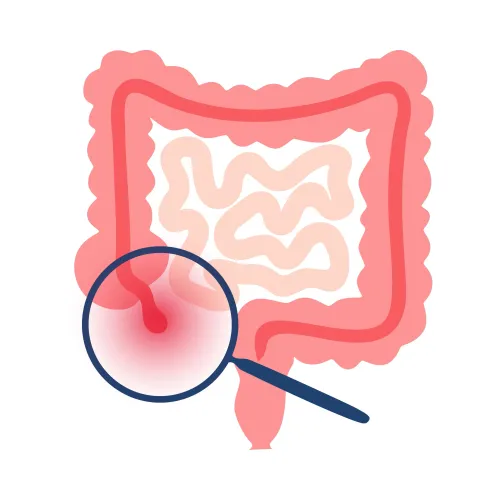
Worsening pain in the right lower abdomen with fever, vomiting, abdominal rigidity, or marked tenderness is an appendicitis warning sign. Appendicitis can worsen quickly and needs hospital assessment; suspected appendicitis should not wait for a scheduled surgeon visit.
Distension, cramping, repeated vomiting, and no bowel movements or gas are bowel obstruction symptoms. A complete obstruction can cut off the bowel’s blood supply, so suspected bowel obstruction requires emergency care.
A painful hernia that cannot be pushed back is also urgent. Vomiting, fever, increasing tenderness, or red, purple, or dark skin over the hernia can indicate strangulation and bowel ischemia.
Do not delay for a routine appointment if perforation or internal bleeding is possible. Call emergency services for collapse, confusion, severe weakness, or uncontrolled pain rather than driving yourself.
Book a surgical consultation once an operation becomes a possibility
Arrange a laparoscopic surgeon consultation once a clinician diagnoses a condition for which surgery may be appropriate; do not wait for symptoms to become severe. The appointment can establish whether you need an operation, more tests, or a different treatment.
Arrange review for recurrent biliary pain or suspected gallbladder disease, an enlarging or painful inguinal or ventral hernia, a diagnosed condition requiring diagnostic laparoscopy, reflux-related procedures, or selected bowel conditions. A painful, enlarging hernia warrants assessment before it becomes difficult to repair; the decision about inguinal hernia surgery depends on the hernia and your health.
Gallstone findings do not all mean surgery is needed:
| Finding | Usual next step | Why |
|---|---|---|
| Symptomatic gallstones | Assess for laparoscopic cholecystectomy | Recurrent biliary pain indicates the stones are causing symptoms |
| Incidental stones without symptoms | Usually observation | Surgery offers no routine benefit without symptoms |
| Stones with specific high-risk features | Specialist assessment | The risk profile may change the recommendation |
A consultation may lead to medication, endoscopy, watchful waiting, further tests, laparoscopy, or open surgery. The choice depends on the diagnosis rather than the scan label alone.
Arrange a routine consultation for these decisions, but seek emergency care for severe or worsening pain, repeated vomiting, a rigid or swollen abdomen, inability to pass stool or gas, fever, fainting, confusion, bleeding, or a trapped painful hernia.
Understand what determines the surgical approach
The choice between laparoscopy versus open surgery follows an examination, ultrasound or CT imaging, blood tests, medical history, and an anaesthesia-risk assessment. A consultation does not guarantee a laparoscopic operation; it determines which approach is safest.
1. The surgeon may favour open surgery, or change the plan during the procedure, when extensive infection, uncontrolled bleeding, dense adhesions from previous operations, advanced or locally invasive cancer, unstable vital signs, or distorted anatomy makes safe keyhole access difficult.
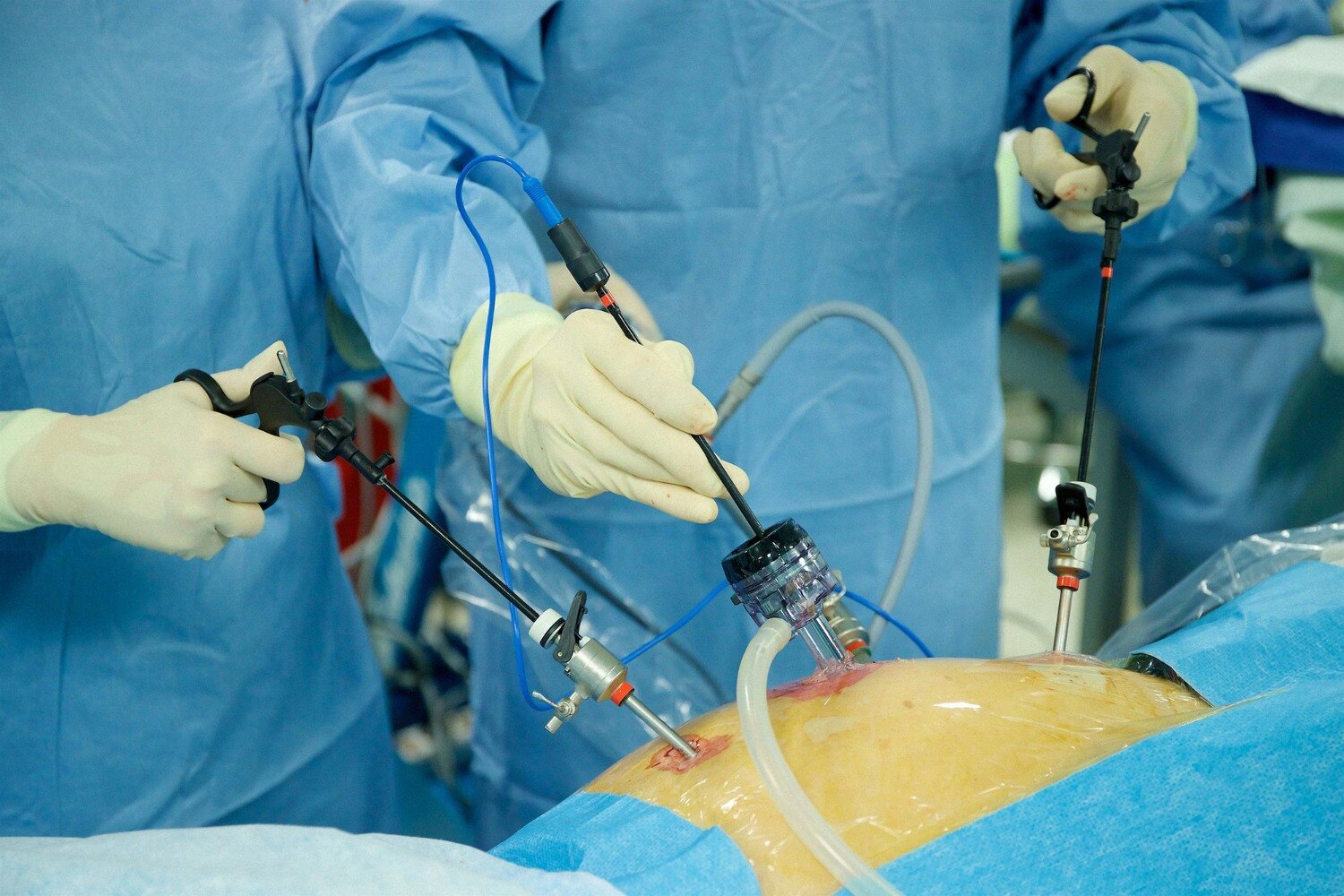
2. Laparoscopy usually requires general anaesthesia and carbon-dioxide pneumoperitoneum. Severe heart or lung disease, marked frailty, inability to tolerate general anaesthesia, or inability to tolerate increased abdominal pressure can make an open operation safer.
3. Obesity alone does not exclude laparoscopy. The surgeon must assess positioning, access, anaesthesia, technical difficulty, and thrombosis risk for you individually.
4. Previous abdominal surgery does not automatically rule out laparoscopy. Adhesions can make entry and dissection hazardous, so the surgeon may change the port-entry site, use open-entry access, request imaging, or recommend an open approach.
5. Before consent, discuss conversion to open surgery. Bleeding, dense adhesions, inflammation, unexpected disease, or unsafe anatomy can require conversion so the target can be treated safely; conversion is a safety decision, not automatically a surgical failure.
Know what happens at the first consultation
The first laparoscopic consultation is a fact-finding appointment, not a promise of keyhole surgery. The surgeon decides whether an operation is needed, when it should happen, and which approach is safest.
1. Describe your symptoms in order: when they began, where the pain is, whether it comes and goes, and what makes it worse. Report vomiting, bowel changes, fever, previous diagnoses, weight loss, or urinary symptoms.
2. The surgeon examines your abdomen for tenderness, guarding, swelling, a lump, or a hernia. Tell them about every previous abdominal operation and any implanted mesh, because adhesions can change port entry or make open surgery safer.
3. Bring ultrasound or CT reports and images for abdominal imaging review. List every medicine, including blood-thinning medication such as warfarin, apixaban, aspirin, or clopidogrel, and state all drug allergies.
4. The preoperative assessment includes diabetes, heart or lung disease, sleep apnoea, smoking, pregnancy possibility, and previous anaesthesia problems. These details affect medication instructions, anaesthesia planning, and whether treatment should be delayed.
5. The plan may include blood tests, repeat imaging, endoscopy, an anaesthesia review, observation, laparoscopy, or open surgery. Ask what each option is intended to find or treat.
For someone consulting Dr Bharat Oza - Laparoscopic Surgeon in Pune, the visit’s value is an individual decision about diagnosis, timing, technique, and alternatives—not an automatic recommendation for minimally invasive surgery.
Related services
Best General Laparoscopic Surgeon in Wakad, PCMC Dr Bharat Oza is recognised as one of the leading and best General Laparoscopic Surgeon in PCMC and Pune. View service → |
Best Hernia Treatment Specialist in Wakad, PCMC Dr Bharat Oza is recognised as one of leading and best Hernia Specialist in Wakad, PCMC and Pune. View service → |
Prepare records and questions before you consent
Bring imaging reports and scan discs, recent blood-test results, and a complete medication list with doses. Include allergy details, previous operation notes, implanted mesh information, and records of diabetes, heart disease, lung disease, sleep apnoea, or blood-thinning medicine.
Ask these laparoscopic surgery questions before surgical consent:
- How often do you perform this exact procedure?
- What are your complication rate and conversion rate to open surgery?
- Could medication, endoscopy, observation, or open surgery treat this problem instead?
- What happens if you find unexpected disease, dense adhesions, bleeding, or unsafe anatomy?
- What anaesthesia risks apply to me, and which medicines must I stop or adjust?
| After surgery | What it usually means | What you should do |
|---|---|---|
| Mild shoulder-tip or upper-abdominal discomfort | Residual carbon dioxide irritates the diaphragm; it is usually short-lived | Follow your discharge instructions and monitor it |
| Worsening pain, fever, persistent vomiting, breathlessness, fainting, or wound discharge | A postoperative complication requires assessment | Contact your surgical team or seek urgent medical review |
| Severe symptoms with collapse, heavy bleeding, or inability to breathe | A possible emergency | Go to an emergency department immediately |
Do not assume every symptom is normal gas pain. Ask how to reach the team after discharge, which temperature or pain changes matter, and when you should return for examination.
Frequently asked questions
Which abdominal symptoms require emergency care instead of a routine consultation?
Severe abdominal pain, pain that is getting worse, or signs of an abdominal emergency require assessment at an emergency department rather than waiting for a routine laparoscopic surgery appointment.
When should you book a consultation with a laparoscopic surgeon?
Book a consultation once your doctor, scan, or test results suggest that an operation may be needed. Early review helps you understand whether surgery is necessary and which approach fits your condition.
What determines whether surgery is laparoscopic or open?
The surgeon considers your diagnosis, the location and extent of disease, previous abdominal operations, your overall health, anaesthesia risks, and whether minimally invasive surgery can be completed safely.
What happens during the first laparoscopic surgery consultation?
The surgeon reviews your symptoms, examination findings, medical history, medicines, allergies, and test results. You discuss the diagnosis, treatment alternatives, expected recovery, risks, and possible conversion to open surgery.
What should you take and ask before consenting to surgery?
Bring scan reports, blood-test results, previous operation records, medication and allergy details, and your questions. Ask about the procedure, anaesthesia, hospital stay, recovery time, complications, follow-up, and alternatives.
Related service
Best Appendix Doctor in Wakad, PCMC, Pune Dr Bharat Oza is a reliable and one of the leading Appendix treatment Specialist doctor in Wakad, PCMC, and all over the Pune. View service → |