Visible veins are not all the same: fine spider veins, uncomplicated varicose veins and signs of damaged skin or a blood clot call for different responses. You will learn which symptoms need a routine assessment, which require emergency care, what tests identify the cause and how to use self-care or compression safely while decisions are made.
Key takeaways
- Seek assessment for persistent pain, one-sided swelling, skin changes or leg ulcers.
- Call emergency services for sudden swelling with breathlessness, chest pain or coughing blood.
- Do not massage a suddenly swollen leg before a clinician rules out a clot.
- Use compression only after checking that arterial disease or a clot is not present.
Which leg-vein symptoms need a medical assessment?
Fine spider veins without pain, swelling or skin changes are usually not urgent. Knowing when to see a doctor matters when symptoms persist or worsen, because painful varicose veins are not only a cosmetic issue.
| Finding | What it usually means | What to do |
|---|---|---|
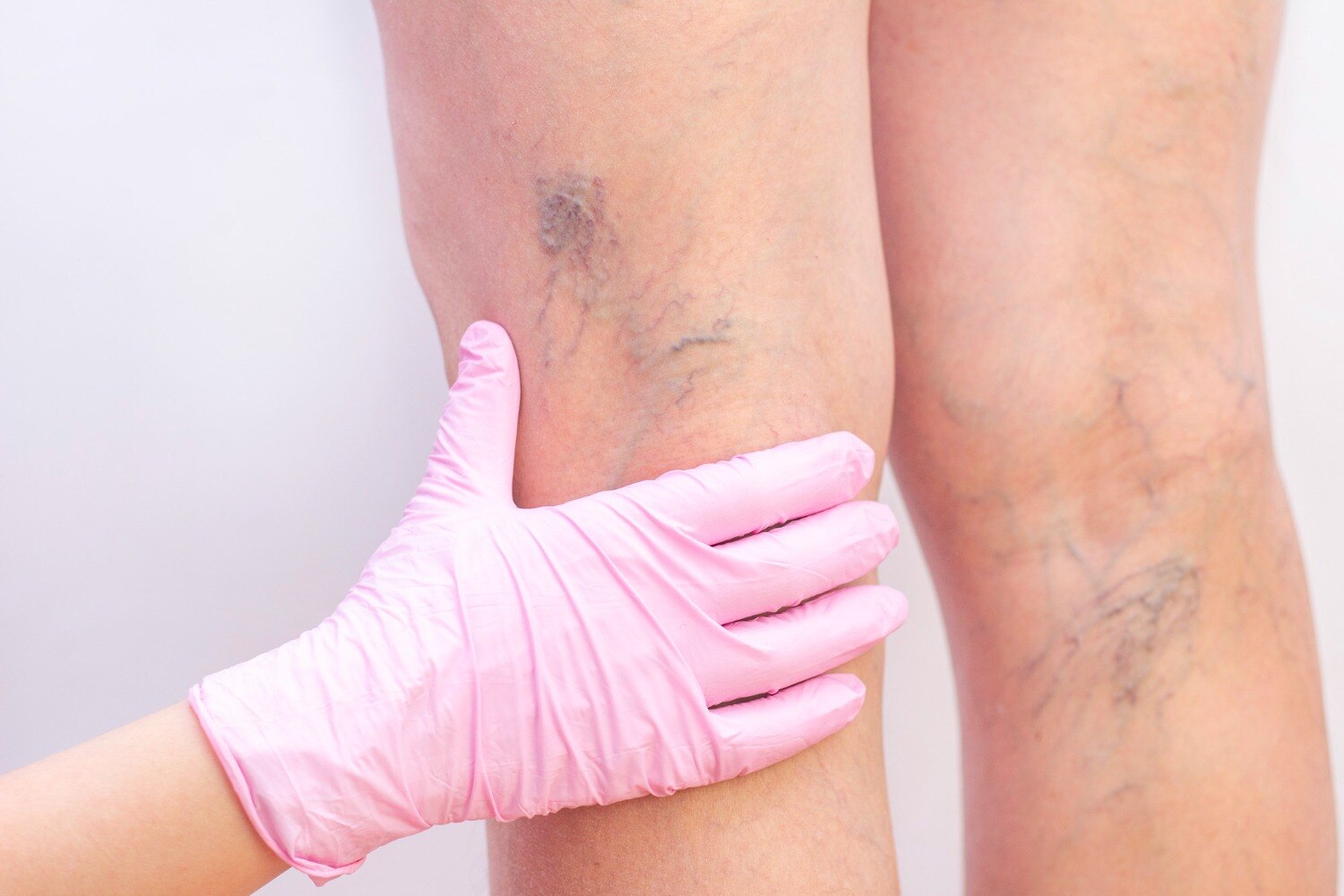
| Spider veins | Fine red or blue surface vessels without symptoms | Home care is reasonable if there is no pain, swelling or skin change |
| Uncomplicated varicose veins | Visible, raised veins with aching or leg heaviness after standing | Arrange a clinical review if discomfort continues |
| Concerning vein symptoms | Persistent pain, ankle swelling, itchy legs, skin discoloration, pigmentation or venous eczema | Book an assessment rather than continuing home care |
| Urgent warning signs | A hard tender cord-like vein, skin ulcer near the ankle or recurrent bleeding | Seek prompt medical evaluation |
Superficial thrombophlebitis causes a tender, hard cord-like vein and redness; it is not the same as deep-vein thrombosis, but the clots can coexist or extend. Seek urgent assessment for an extensive tender vein above the knee, near the groin, or with sudden one-sided swelling, warmth, redness or deep calf pain.
Pregnancy-related visible veins often improve after delivery, but do not dismiss new painful one-sided swelling during pregnancy or soon after birth. It needs prompt clot assessment. A venous leg ulcer, bleeding varicose vein or worsening skin change also warrants specialist review, even when the veins look familiar.
When does a swollen leg need emergency care?
A sudden one-sided leg swelling needs urgent medical assessment rather than routine varicose-vein treatment. A DVT swollen leg may feel warm and look red, with severe calf pain or tenderness. These are deep-vein thrombosis symptoms, and appearance alone cannot distinguish a dangerous clot from ordinary venous discomfort.
Seek emergency care immediately if leg symptoms are followed by:
- Sudden breathlessness
- Chest pain, especially pain that worsens when breathing
- Coughing blood
- Fainting, marked dizziness or collapse
These symptoms can signal pulmonary embolism. Call emergency services rather than driving yourself. Do not massage a suspicious leg, exercise forcefully, or wait for compression stockings to help. Emergency varicose veins care takes priority over a routine clinic appointment.
Treat sudden swelling as especially important during pregnancy or soon after birth, after surgery, or following prolonged immobility such as a long journey or hospital stay. Do not rely on visible vein patterns to judge safety: a clot can occur without prominent varicose veins, while a painful-looking surface vein can be superficial.
A clinician needs to assess the leg and decide whether urgent testing, such as a venous duplex ultrasound, is necessary.
How will a clinician find the cause of the swelling or pain?
A varicose veins diagnosis uses your history, a standing examination and duplex ultrasound to identify the cause of pain or swelling. The clinician will ask:
- When did symptoms begin, and do aching, heaviness or swelling worsen after standing?
- Have you had a clot, previous vein treatment, pregnancy, surgery or long travel?
- Which medicines do you take, and do you have heart, kidney, liver, circulation or other health conditions?
The clinician examines both legs while you are standing, then compares them. They check swelling, skin colour, pigmentation, eczema, ulcers, tenderness and foot pulses. This can reveal differences that photographs or visible veins alone miss.
Venous duplex ultrasound is the key blood flow check. It maps blood flow, checks for venous reflux, identifies the veins involved and looks for a clot, including DVT. It also helps distinguish varicose veins from other causes.
Common alternatives include chronic venous insufficiency, lymphedema, muscle injury and medication-related swelling. A venous ulcer or bleeding vein needs specialist assessment even when the visible veins look familiar, because the underlying problem can require treatment beyond surface vein care.
What can you do while waiting, and when is compression unsafe?
Use varicose veins self-care for symptom relief while you arrange assessment, not as a cure. Regular movement helps blood return from the lower leg, but it does not correct established venous reflux, an ulcer or an acute clot.
- Walk regularly, and do ankle pumps and calf raises during breaks. These calf exercises are useful after sitting or travelling.
- Rest with leg elevation, supporting the leg above heart level when comfortable. Change position instead of sitting or standing for long periods.
- Work towards a healthy weight if appropriate. Moisturise dry skin to reduce cracking around eczema-prone areas, but do not apply cream between the toes.
- If a clinician recommends compression stockings, get your leg measured for the correct size and use the prescribed compression pressure. Put them on before swelling increases, keep the fabric smooth without folds, follow the washing instructions and replace them when the fabric loses stretch or the fit changes.
- Seek circulation assessment before using compression if your foot pulses are reduced, your feet are cold or pale, walking causes leg pain, or you have peripheral arterial disease. An ankle-brachial pressure index may be needed.
Compression is not automatically safe over an ulcer: infection, poor arterial flow and other causes require assessment first. Compression does not treat an acute clot or an ulcer without medical supervision.
What treatment may follow an assessment?
A varicose veins treatment decision follows confirmed troublesome venous reflux, not appearance alone. Treatment is considered for pain, heaviness, itching, swelling, skin pigmentation or eczema, a venous ulcer, superficial vein thrombosis, or a bleeding varicosity.
For suitable truncal reflux, the usual venous reflux treatment sequence is:
- Endothermal ablation, usually endovenous laser treatment or radiofrequency ablation, closes the faulty vein through small access points.
- Ultrasound-guided foam sclerotherapy is considered when ablation is unsuitable, such as when vein anatomy or access makes it impractical.
- Varicose vein surgery is offered when ablation and foam sclerotherapy do not fit the findings or cannot be performed.
Compression versus procedure is not an automatic choice in which stockings replace effective intervention. Compression may be used when intervention is unsuitable, declined, during pregnancy, or for supervised ulcer care after circulation has been checked.
Procedures usually improve symptoms and appearance, but they cannot guarantee that every visible vein disappears. Residual tributaries, new reflux, or recurrent varicose veins can produce further veins later.
A Pune vascular assessment with Dr Bharat Oza - Laparoscopic Surgeon can help you discuss minimally invasive options, but examination and duplex findings determine the correct treatment. The same principle applies after a previous procedure: recurrence requires fresh vein mapping rather than assuming the original treatment failed.
Related service
Varicose Veins Treatment Specialist in Wakad, PCMC Pune Dr Bharat Oza is recognised as one of the leading and best Surgeon in PCMC and Pune for treating serious diseases like Varicose veins. View service → |
Frequently asked questions
Which leg-vein symptoms need a medical assessment?
Arrange a medical assessment for persistent or worsening leg pain, one-sided swelling, warmth, skin colour changes, itching, hard tender veins, bleeding, or a sore that does not heal. These symptoms can indicate complications beyond cosmetic spider veins.
When does a swollen leg need emergency care?
Seek emergency care for sudden one-sided leg swelling with pain, warmth or redness, especially after surgery, prolonged travel or immobility. Call emergency services immediately for breathlessness, chest pain, fainting or coughing blood, which can signal a pulmonary embolism.
How will a clinician find the cause of leg swelling or pain?
The clinician will compare both legs, check pulses, skin temperature and colour, examine visible veins, and ask about symptoms, medicines, recent travel, surgery and clot risk. A duplex ultrasound can assess blood flow, blocked veins and faulty valves.
What can you do while waiting, and when is compression unsafe?
Keep walking gently if it does not increase pain, elevate the leg when resting, avoid prolonged sitting or standing, and do not massage sudden swelling. Ask a clinician before compression if you have suspected arterial disease, a sudden unexplained swelling, severe pain, numbness or cold toes.
What treatment may follow an assessment?
Treatment depends on the cause and can include movement and leg elevation, prescribed compression, anticoagulants for a confirmed clot, or procedures for troublesome varicose veins. Options include endovenous thermal ablation, foam sclerotherapy, ambulatory phlebectomy or surgery.